





Hydro Testing Basics
Why Hydro Testing Matters
- Required to confirm a cylinder is structurally sound
- Helps verify your tank is safe for pressurized use
- Important for paintball HPA systems, CO2 bottles, and compressed air cylinders
- Expired tanks should not be filled until properly re-certified
Quick Summary
- Most modern air bottles require testing every 5 years
- Some cylinder types use different retest intervals
- Date information is stamped or printed directly on the bottle
- A failed cylinder cannot be returned to service
What Hydro Testing Is
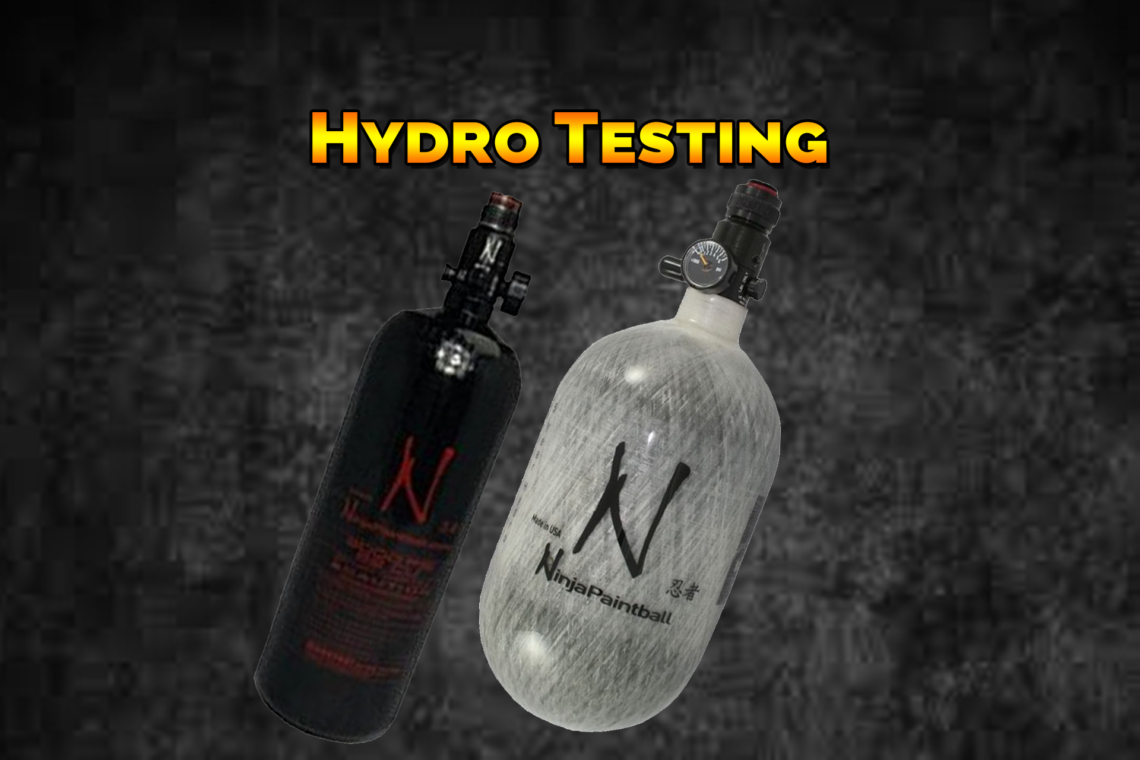
Paintball air tanks are required to be hydrostatically tested every few years to help ensure they remain structurally sound and safe for use. The service life of paintball bottles can be tracked by the hydro date printed or stamped on the cylinder.
Most modern paintball air bottles must be tested every five years. The required date can usually be found directly on the bottle. CO2 bottles and aluminum compressed air tanks often have the month and year stamped near the valve at the top. Carbon fiber compressed air bottles usually show the information on a label printed on the side of the bottle. Hydro testing must be completed within the allowed interval from the date shown on the tank. Once tested, a cylinder may either be re-certified for continued use or removed from service if visible damage or another safety issue is found.
Common Test Intervals
5-Year Test
- DOT 3A
- ICC 3A
- DOT 3AA
- ICC 3AA
- DOT 3AL
3-Year Test
- DOT 3HT
Reading the Rating
All cylinders have markings that begin with DOT or ICC, followed by the service pressure. For example, DOT 3AA 1800 means a DOT-approved cylinder built to the 3AA specification and rated for 1800 psi.
How to Read Tank Markings


Important Info
Expand the sections below for marking guides, test interval details, and common hydro questions.
DO NOT FILL EXPIRED TANKS
If your cylinder is out of hydro, it should not be filled until it has been properly re-certified.
Check your bottle markings before coming in.
When in doubt, call the shop and verify your tank type and date.
Questions About Hydro Testing?
585-328-0250
This number does not receive texts.
Fiber Wrapped / Carbon Fiber Cylinder Markings
On fiber wrapped or carbon fiber cylinders, important information is commonly shown on the bottle label.
- DOT exemption number
- Service pressure in psi
- Serial number
- Manufacturer
- Original hydro date with testing agency stamp
- Rejection elastic expansion value
CO2 Tank Markings
CO2 tanks usually have the month and year stamped near the valve area at the top of the bottle.
That stamped date helps determine when the cylinder must be hydro tested again.
Aluminum or Steel Cylinder Markings
Cylinder specifications often appear in three parts:
- DOT – Department of Transportation
- 3AA – Cylinder specification and material type
- 2265 – Service pressure in psi
Additional markings may include serial number, manufacturer symbol, original manufacture date, retester markings, and qualification symbols such as + or *.
Retest Markings
Retest markings show when a tank was last requalified and who performed that requalification.
- Date of hydro retest
- Retester identifying symbol
- Qualification symbols where applicable
These markings help determine whether a bottle is still legal to fill and use.
More Details
Expand the sections below for additional guidance related to hydro testing and tank safety.
When a Tank Needs Testing
Hydro testing is based on the marked test interval for the cylinder and the original or most recent hydro date printed or stamped on the tank.
Most paintball players should check their bottles regularly so they do not show up with an expired tank on game day.
What Happens If a Tank Fails
If a bottle shows damage or does not meet safety standards during testing, it cannot be re-certified for use.
In that case, it must be removed from service.
Common Hydro Questions
What is hydro testing?
It is a required safety inspection used to verify a cylinder is still safe for pressurized use.
How often do paintball tanks need hydro testing?
Most modern bottles require testing every five years, though some cylinders have different intervals.
Where do I find the date?
Look for a stamped or printed month and year on the tank body, near the neck, or on the bottle label.
Can I use an expired tank?
No. Expired cylinders should not be filled until they have been re-certified.
Related Services
 No Personal Checks Please.